
WINTERBURY WISDOM
How You Can Help The NHS This Winter
No doubt you have heard the phrase ‘winter pressures’ in relation to the NHS, but why do these pressures occur, and what you can you (as an individual) do to help?
Each year there is a surge in demand on health services (A&E, ambulances, hospitals) due to cold weather, increased infections (flu, norovirus), and more people with existing conditions needing care, leading to bed shortages, longer waits, and staff burnout.
Hospital wards become full, with the situation exacerbated by lack of social care beds outside hospital to move people to, leading to A&E being unable to find beds for people who come in via an emergency route. A&E becomes clogged, and ambulances then have to wait to offload patients into more suitable care, sometimes being treated on the ambulances themselves for several hours. These ambulances can’t turn around to get to the next patient, and the waiting times increase; the ambulance service has to prioritise the most serious, life-threatening cases so those with a need for an ambulance but not in a life-threatening condition, for example people who have fallen and are unable to get up, wait for lengthy periods. This can sometimes lead to further problems for the patient as the ‘long lie’ creates additional medical issues.
This winter has already seen rotavirus and norovirus (stomach bugs) doing the rounds, but of particular note has been the surge in flu cases, and at an earlier point in the year than has been seen previously. Over 1700 beds were taken up in hospitals last week due to flu and the situation appears to be worsening; the strain this year seems particularly hard-hitting and I personally know of two people who this week have needed hospital treatment because of it – both of whom are normally young, fit and healthy with no pre-existing conditions.
If it’s hitting healthy people hard, it will have a more devastating effect on those who are already fighting other medical conditions, or who are more medically vulnerable. People taking these winter viruses into hospitals, care homes, schools, workplaces etc. will potentially spread the conditions further and pressures could increase further.
But what can you do about it?
Avoid the spread – if you’re unwell, don’t mix with others. Hand hygiene, disposable tissues (and disposing of them!!), sanitiser and even a return to face masks may be appropriate (our local hospital has returned to mask wearing in some departments, and the ambulance service will be using them more frequently too). Particularly over the festive period when you may mix with wider family and friends, be careful to practice good hand hygiene and think carefully before mixing with more vulnerable relatives or friends.
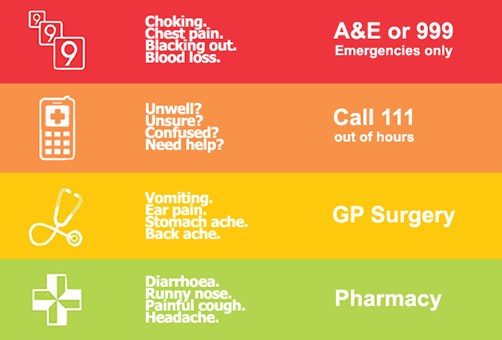
Use A&E for accidents and emergencies only (there’s a reason it’s called A&E!). Unless it’s life threatening, very serious or an injury that cannot be treated elsewhere, seek alternative routes to treatment. You’ll ease the pressure on the system, avoid very lengthy waits for minor issues and dodge the germs circulating in the waiting room, too!
Consider:
· Minor injuries units (locally, there’s one in Andover with x-ray facilities)
· GPs – yes, waits can be lengthy for routine issues but they will see urgent issues quickly
· Walk-in centres (locally, on Millstream Approach in Salisbury, open Mon-Fri 6.30-10pm and weekends 8am to 8pm) – if you can’t get an urgent appointment with your GP
· Pharmacists – can offer advice and even prescribe antibiotics for some conditions
· 111
Were these appropriate use of emergency treatment services?
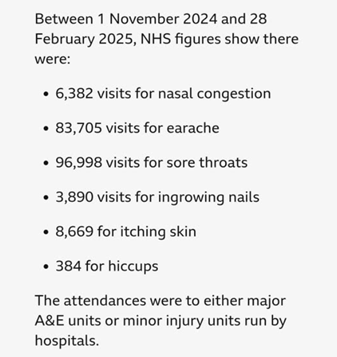
Only phone for an ambulance if there is no alternative – your call for a ‘taxi’ will result in a lengthy wait and further pressures along the line. Can you get to A&E by car? In a taxi? On a bus? For many conditions if you could get there by bus then you might be considering the wrong treatment route… An ambulance for a potentially broken arm might be stopping someone else from receiving treatment for a heart attack or stroke.
However, on the flip side, don’t NOT call an ambulance or seek treatment if you need it. In particular, Sepsis figures tend to spike at this time of year and early treatment can result in much better outcomes, so if you or someone you know has had an infection that hasn’t improved after one or two courses of antibiotics and they are still very unwell, do seek medical attention swiftly.
Let’s help the NHS to help us when we most need it this winter!